QuickLinks

Contact Us

Enrol

QuickLinks
Contact Us
Enrol
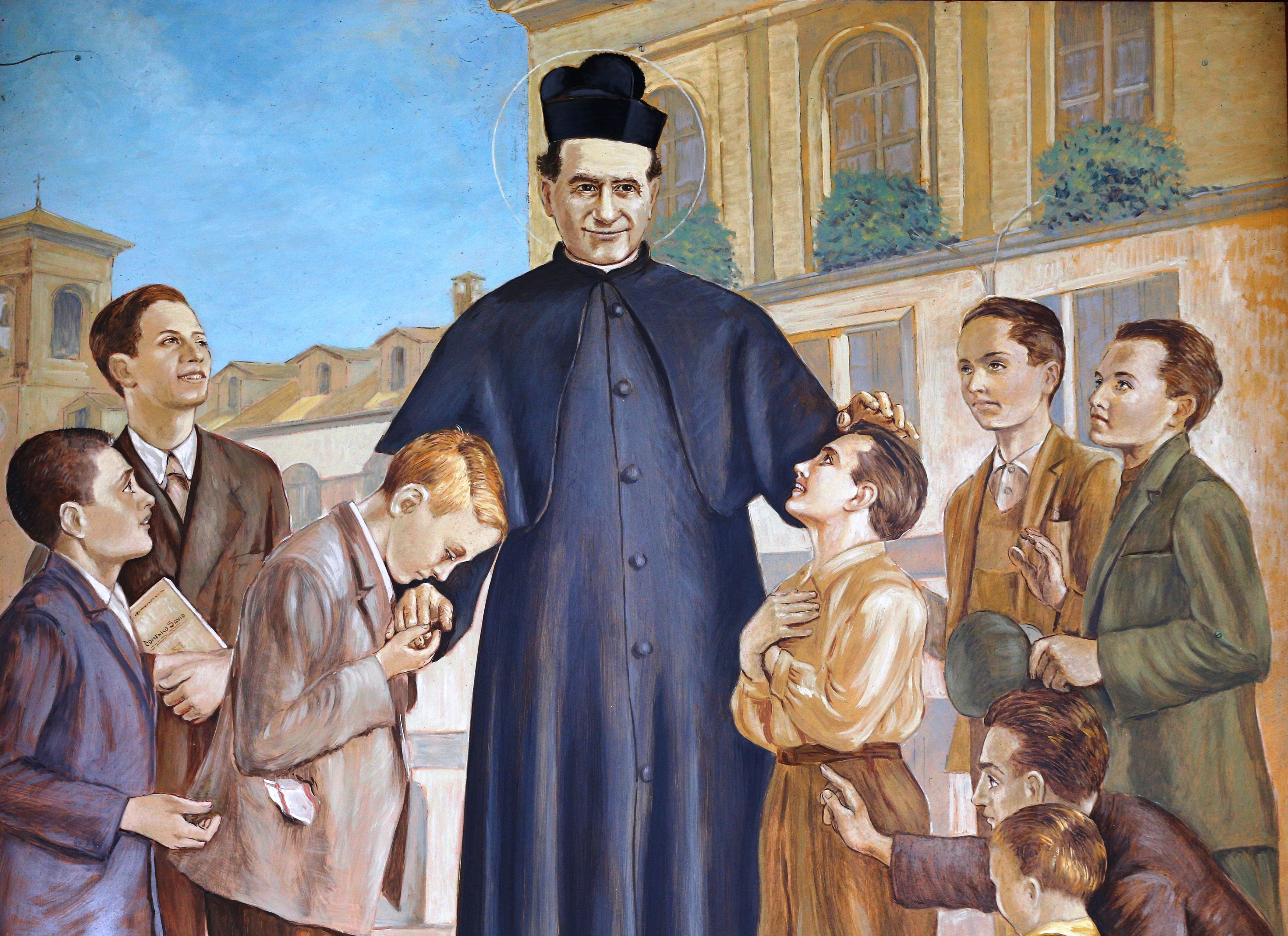
John Bosco was born on 16 August 1815 near the village Castelnuovo d’Asti, in Piedmont (northern Italy) popularly called Becchi. When he was nine years old, he had a dream where he was in the middle of a crowd of children at play. From this dream he dedicated his life to Jesus and the Virgin Mary.
Wishing to become a Priest and to dedicate himself entirely to the salvation of young people, he would work by day, and spend nights at his books. Finally at the age of twenty, he was able to enter the Seminary in Cheiri and be ordained a Priest in Turin, at the age of twenty six in 1841.
Don Bosco started to gather the orphaned or abandoned together on Sundays, sometimes in a Church, or out on a grassy meadow, a town square. He would get them to play and instruct them in the Catechism. After five years he managed to establish and open, in the outlying suburb of Valdocco, his first Oratory.
In the Oratory, the boys found food and a bed, they would study or learn a trade, and above all else they learned to love the Lord. Saint Dominic Savio was one of them. Wishing to extend his apostolate also to young girls, he founded with Saint Maria Domenica Mazzarello, the FMA, the congregation of the Daughters of Mary Help of Christians.
The Salesians and Daughters of Mary Help of Christians have spread throughout the world in the service of young people, and of the poor and suffering. There are schools of every type and level: technical and professional institutes, hospitals, dispensaries, oratories and Parishes.
John died on 31 January 1888, in his room at Valdocco, at the age of 72 years. On 1 April 1934, Pope Pius XI, who had the good fortune to know John personally, proclaimed him a Saint.
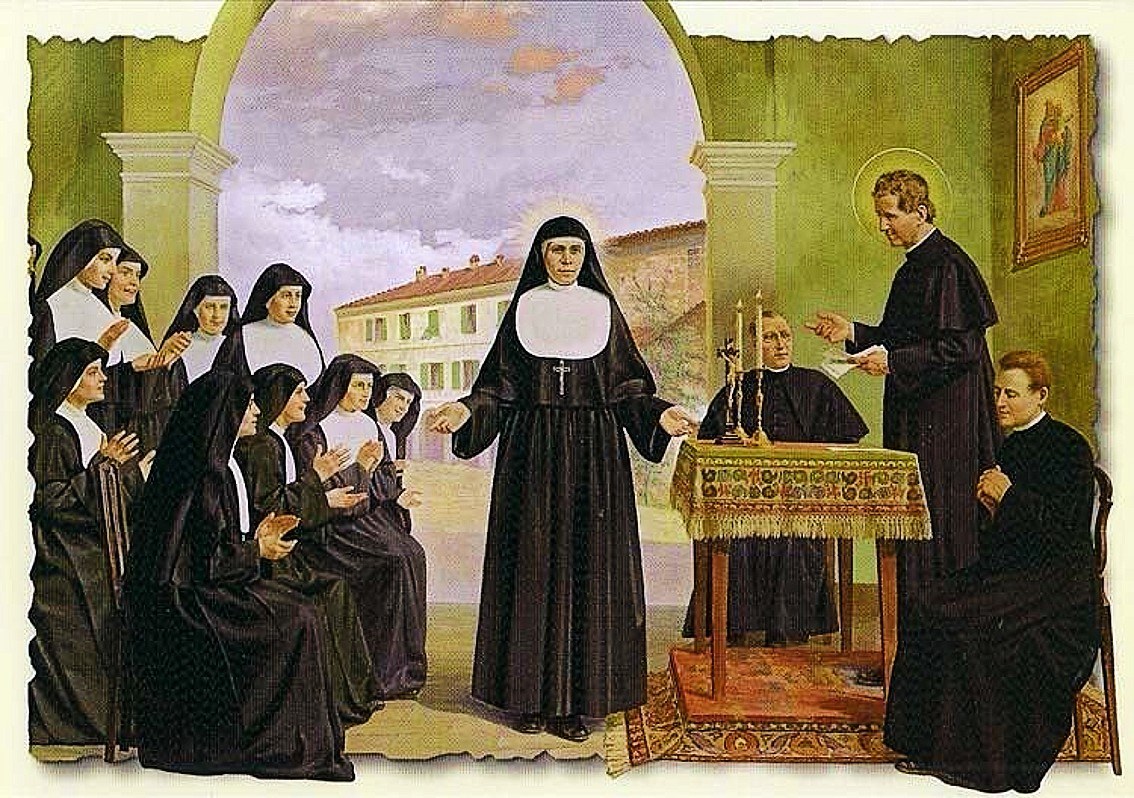
Maria was born in Mornese, Northen Italy, to a poor family who worked as day labourers. When she was fifteen she joined the Association of the Daughters of Mary Immaculate, run by her Parish Priest, Father Pestarino; it was a precursor to the founding of the Salesian Sisters.
The Daughters were known for their charitable works and Mary soon set herself apart for her sound judgement, dedication, joy and love of the young. Wherever she went the village children were drawn to her like a magnet, eager to hear her jokes and stories, or to ask her a question.
The Daughters took in a few young girls and housing and schooling them in the faith and handing down to them their knowledge of dress making. In 1867, after meeting with the daughters and receiving their enthusiastic response to his vision for young girls, Don Bosco drew up their first rule of life. A source of the community’s good spirit, sense of humour, optimism and charity, Mary Mazzarello was a natural choice as
the first superior.
At thirty-five donned in a habit which she herself had designed. Mary was now Sister Mary Mazzarello. She and the fourteen other newly professed religious Sisters made up the fledgling order. The Daughters of Mary Help of Christians was officially founded. As the feminine branch of the Salesian religious family, the Daughters of Mary Help of Christians sought to do for girls what the Priests and Brothers were doing for boys in Turin.
Her dedication to her Sisters was not limited to their intellectual development alone. In every way she was an attentive mother, which is why to this day she is fondly referred to as Mother Mazzarello by the Salesian Sisters. Maria died on 14th May 1881. She was beatified on 20 November 1938 and canonized on
24 June 1951.
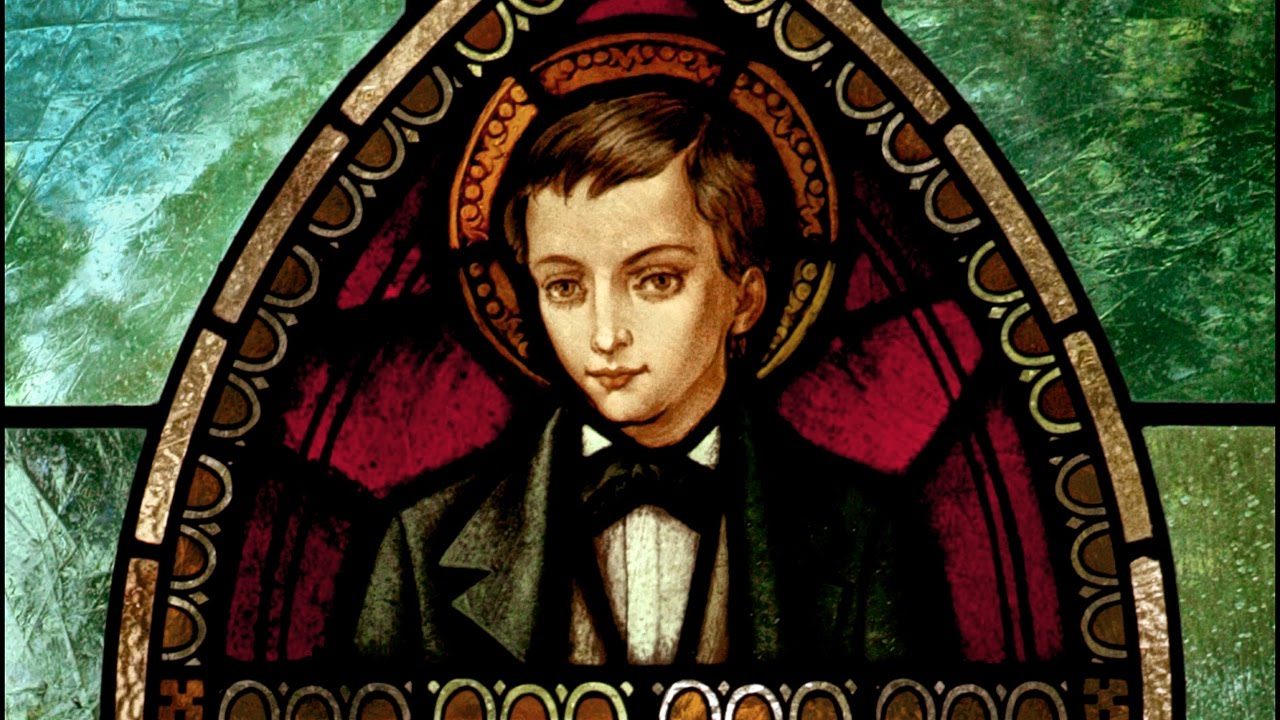
Dominic Savio was born in 1842 in the village of Riva (Northern Italy), and was blessed with a strong faith even
as a young boy. In 1854, at the age of twelve, Dominic’s teacher, Fr Cugliero recommended that he enrol at St John Bosco school (The Oratory of St Francis de Sales) in Turin, Italy. He soon impressed his teachers with his dedication to his studies, commitment to his faith and his maturity as a person.
Dominic used his gifts of leadership to positively influence his friends. Dominic had a strong and active faith. He prayed regularly and had a great love for the sacraments, especially the Eucharist. He often spoke to his companions about the benefits of loving and serving God and he wanted to become a Priest and be a missionary.
When a new student arrived at Oratory he would be the first to greet them and would encourage them by reassuring them. “Here we make holiness consist in always being happy” and to become a good Christian was “not a matter of doing extraordinary things but of doing ordinary things extraordinarily well”.
Dominic’s natural cheerfulness and sense of humour enabled him to engage others - he was enthusiastic in games during recreation time and was able to guide the course of the conversations so that nobody was hurt, criticised or ridiculed. However, Dominic was never a physically strong boy and his health was always weak.
Dominic died on March 9th, 1857 at the age of fifteen.